Holding Emotions
Awareness
Become aware of the emotion in your body.
Focus on your body and notice any physical sensations that are present including tightness, tension, heaviness, warmth, or any other bodily cues that may be associated with an emotion.
Be aware of changes in your heart rate, breathing pattern, temperature, or any other physiological responses that may accompany the emotion.
Pay attention to any nonverbal cues that your body may be displaying, such as facial expressions, posture, gestures, or muscle tension. These cues can provide valuable information about the emotion you are experiencing.
Acknowledgement
Acknowledge the emotion by naming it and locating it in your body.
Identify the emotion: Give a name to the emotion you are experiencing. This can be a basic emotion like happiness, sadness, anger, fear, or it can be a more complex emotion like frustration, jealousy, or excitement. Use words that accurately describe what you are feeling.
Locate the emotion in your body: Direct your attention to the area of your body where you feel the emotion most prominently. It could be in your chest, stomach, throat, head, or any other part of your body.
Notice the specific sensations and qualities of the emotion in that area. You may find it helpful to give the emotion a shape, texture, or colour.
Acceptance
Accept the emotion and welcome it with curiosity and compassion.
Cultivate an attitude of non-judgment and acceptance towards the emotion. Recognise that emotions are a natural part of being human and that there are no "good" or "bad" emotions.
Allow yourself to experience the emotion without trying to suppress or change it. Emotions can be experienced through creativity, guided meditation, screaming, yoga, punching a pillow to release frustration, dancing, letting yourself cry, wrapping yourself in a blanket, going for a walk, journalling, having a safe friend sit with you.
Adopt a curious mindset towards the emotion, exploring its origin, triggers, and underlying needs. Ask yourself questions like, "What is this emotion trying to tell me?" or "What is the positive intent of this emotion?" This curiosity helps you gain insight into your emotional experiences.
Offer yourself compassion and understanding as you navigate the emotion. Treat yourself with kindness and gentleness, just as you would a friend who is experiencing a challenging emotion.
Recognise that emotions are a part of the human experience and that it is okay to feel them.
Attendance
Take time for self-care, physically, emotionally, and mentally.
Eat a healthy snack.
Drink a glass of water.
Have a shower or bath.
Take a nap.
Read a book your love.
Curl up on the couch and watch a movie.
Catch up with a friend.
Drive to the beach.
Please note: If your emotions are consistently overwhelming or you cannot access your emotions then please reach out to a trusted therapist for support and care in a safe environment.
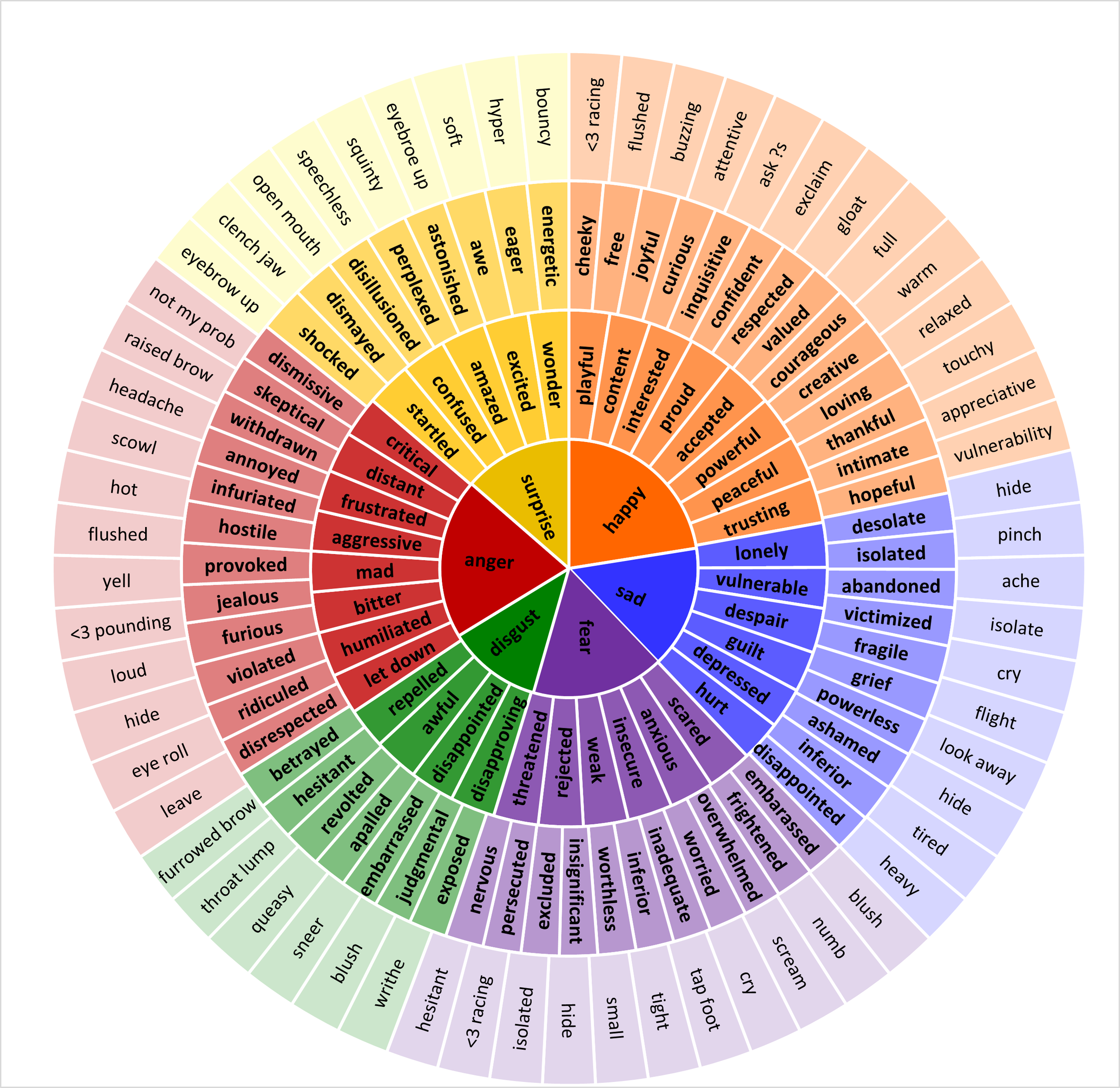
The sensation and emotion wheel below can help you to identify what emotion/s you are feeling.
Work with me: If you're navigating religious trauma or cult recovery, I offer individual coaching, group support, and coaching packages. Learn more about how we can work together.
Connect on Instagram: Follow along for insights, resources, and community.
Check Out The Religious Trauma Collective: Looking for more support and connection? The Religious Trauma Collective offers resources, community, and advocacy for anyone impacted by religious harm.